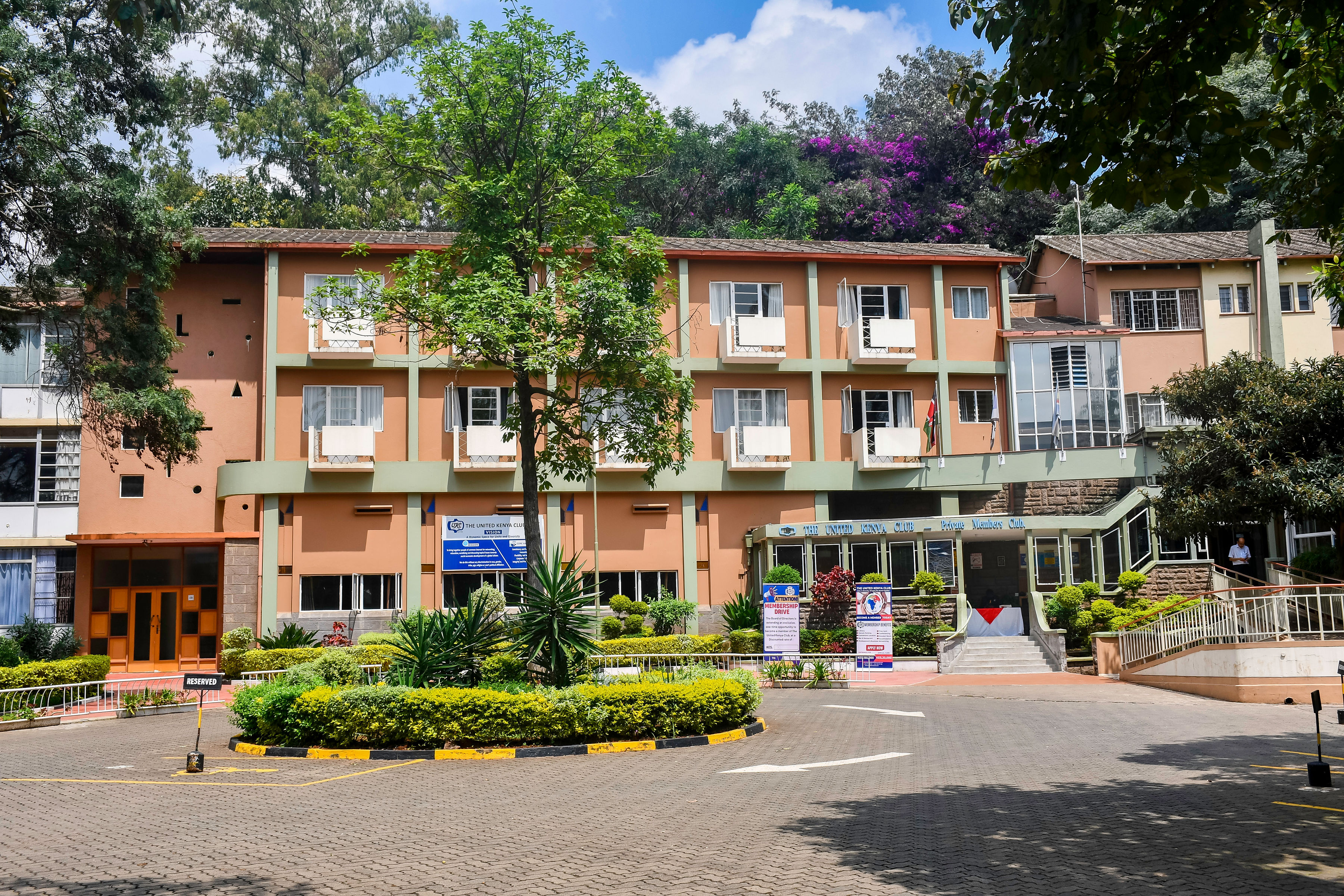
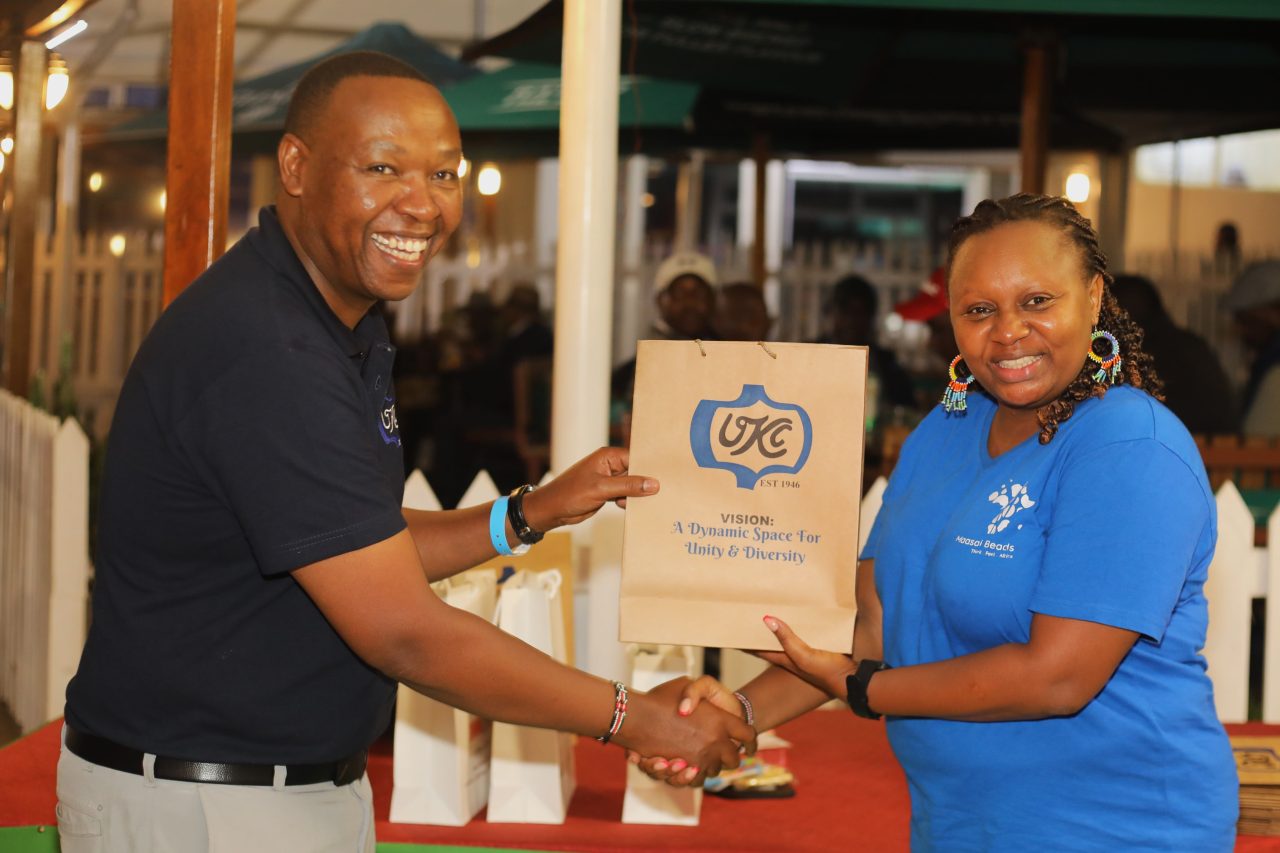
United Kenya Club entrance in Nairobi
About UKC

Detailed History

The story of a Nairobi club built to cross divides.

An extensive overview synthesised from official archives, scholarly texts, and colonial biographical records documenting Kenya's path toward multiracial equity.

Context

Why UKC mattered from the beginning.

United Kenya Club was formally founded on 29 October 1946, during the late colonial period before Kenyan independence in 1963. The official history describes a Nairobi where social life was separated by race: Europeans, Asians, and Africans used different clubs, hotels, restaurants, and meeting places, with Africans facing the most restrictive conditions.

The club's founding answer was practical and symbolic at once: create a place where people could meet socially as equals. Tom Askwith and other founders wanted a regular setting for lunch, evening discussion, cultural exchange, and ordinary companionship. That made the Club one of Kenya's earliest and most influential multiracial social institutions.

UKC's own About page still connects the present club to that inheritance: courtesy, personal service, warm hospitality, unity, diversity, and a refusal to discriminate by race, gender, tribe, age, religion, or political affiliation.

Timeline

From corrugated rooms to a national meeting place.

The sequence below follows the dates and episodes named in the official UKC history, cross-referenced with external peer-reviewed data and biographical timelines.

Pre-1946

A divided colonial city

The club's official history places UKC's origins inside colonial Nairobi, where Europeans, Asians, and Africans moved through different social spaces and faced sharply unequal access to hotels, clubs, restaurants, housing, transport, and public life.

1945

Tom Askwith in Nairobi

Tom Askwith became Municipal African Affairs Officer in Nairobi. The Telegraph obituary describes him as a colonial administrator who argued against segregation, while the UKC history says his work around housing, trade, and recreation exposed him to the social consequences of racial separation.

29 Oct 1946

Formal founding

Interested members from African, Asian, and European communities met formally and launched the club. The founders wanted a social institution where people of different races could meet, eat, converse, and recognize one another outside the rules of segregation.

1946-1948

Askwith as first chairman

The Telegraph identifies Askwith as founder chairman from 1946 to 1948. UKC's history says the chairmanship was designed to rotate among racial groups, with Bethwell Gecaga, Bill Kirkaldy-Willis, and Hassan Nathoo following in early leadership.

1948 onward

Visitors and Wednesday lunches

The visitors' book began in 1948. Wednesday lunches became an important forum where members ate together and heard speakers, creating a civic space that later hosted major debates about social reform, race, land, rights, and independence.

1950

Rapid growth

Membership had reached 325 by 1950. The club began raising money for a permanent building after outgrowing its first rented premises.

1952-1953

Hospital Hill Road premises

The club's present site, then described as Hospital Hill Road and now State House Road, was provided through the Ministry of Lands, Survey and Mines. George Vamos designed the building, construction began in 1952, and Governor Sir Evelyn Baring officially opened it in 1953.

1952-1956

Emergency-era strain

The official history records that the Mau Mau Emergency disrupted club life. Curfews and political tensions reduced African participation sharply, while some European members objected to increasingly political speeches and withdrew.

1958

A revised constitution

UKC's constitution was revised to emphasize that the club was a non-prejudicial social institution. It also created a sounder financial structure, recognized new membership categories, and focused on better service and self-supporting assets.

1961-1962

A larger three-storey club

Under the influence of Sir Ernest Vasey and supporters including Robert Ridley, E. T. Jones, and George Vamos, the club raised funds for a larger building with dining, meeting, lounge, bar, reception, and residential rooms. Governor Sir Patrick Renison opened it on 22 August 1962.

1963-1984

Post-independence leadership and patronage

Charles Njonjo joined before independence and later served as UKC patron from 1963 to 1984. The club attracted civil servants, parliamentarians, academics, business people, professionals, and residents who valued an open social atmosphere.

1970s-1990s

A broader Kenyan membership

The official history says middle-class African members became increasingly central to club life in the 1970s. Andrew Ligale joined the board in 1974 and served as chairman from 1981 to 1996, while membership stood near 1,000 by 1996.

Today

A home away from home

Today, the United Kenya Club is a Nairobi base for members and non-members, offering accommodation, meeting rooms, dining, and hospitality near the University of Nairobi, the CBD, National Museum, Uhuru Park, and the Arboretum, while staying true to the ideals that laid its foundations

Founders

A deliberately mixed founding circle.

UKC's history names founding participants from European, Asian, and African communities. The list below repeats those names as a source record, not as a complete biography of every person.

  • Tom Askwith
  • Bill Kirkaldy-Lewis
  • Charles Mortimer
  • Ernest Vasey
  • T. C. Colchester
  • H. Earnshaw
  • Meredyth Hyde-Clarke
  • P. Phillips
  • Shirley V. Cooke
  • Geoffrey Northcotte
  • Hassan Nathoo
  • K. V. Adalja
  • Eboo Pirbhai
  • J. Ahmed
  • R. G. Datoo
  • Kisken Singh Benawra
  • A. R. Dhanji
  • R. G. Gautama
  • Walter Odede
  • Francis Khamisi
  • Eliud Mathu
  • Musa Amalemba
  • E. K. Binns
  • Bethwell Gecaga
  • John Muchura
  • Muchohi Gikonyo
  • Dedan Githegi

Tom Askwith

The founding chairman, an athlete, and anti-segregation advocate.

The Telegraph's obituary records that Thomas Garrett Askwith was born on 24 May 1911, studied Engineering at Peterhouse, Cambridge, rowed for Great Britain at the 1932 and 1936 Olympic Games, and entered the Colonial Service before being posted to Kenya in 1936.

The same obituary says Askwith promoted community development, supported organizations that gave women a larger role in local projects, argued for an end to segregation, and served as founder chairman of United Kenya Club from 1946 to 1948. UKC's own history places his Nairobi work at the center of the club's founding impulse: he had seen how segregation shaped housing, recreation, wages, transport, and everyday dignity.

United Kenya Club grounds and building from the official About page

Themes

What the history shows.

Image source: United Kenya Club About page.

A deliberate common ground

UKC was not founded as a luxury club first. Its original purpose was social contact across racial lines, with equal representation and a rotating chairmanship meant to prevent one community from owning the institution.

Non-political, but never detached

The early rules called the club non-political, yet the history shows that race relations, public rights, and independence-era questions inevitably entered its rooms through speeches and member debate.

Hospitality as civic infrastructure

Meals, verandahs, accommodation rooms, and meeting spaces were more than amenities. They made repeated contact possible, helped the club become financially resilient, and gave Nairobi a rare shared social setting.

Continuity through change

The club moved from a rented corrugated building to a permanent home, survived emergency-era losses, rebuilt in the early 1960s, broadened after independence, and kept the original idea of welcome alive in a changing Kenya.

References

Source material & bibliography.

United Kenya Club. (n.d.). Our history. United Kenya Club Official Archive.

Primary institutional source providing the definitive timeline of premises relocation, membership figures, internal constitution revisions, and Wednesday luncheon traditions.

Askwith, T. G. (1995). From Mau Mau to Harambee (J. Lonsdale, Ed.). Cambridge University African Studies Centre.

Provides foundational eyewitness context on Tom Askwith's tenure as Municipal African Affairs Officer, detailing his structural opposition to racial segregation in colonial Nairobi housing and recreation.

Vaughan, C. (2018). Civil society and the state in late-colonial Kenya: Multiracialism and the United Kenya Club. Journal of Eastern African Studies, 12(3), 415–433.

A peer-reviewed secondary analysis tracking how the club functioned as an ideological arena where elite multiracialism was leveraged to navigate the geopolitical tensions of the Mau Mau Emergency.

The Telegraph. (2001, September 12). Tom Askwith: Obituary. The Daily Telegraph.

Biographical source confirming Askwith's early career as a Cambridge and Olympic oarsman, alongside his assignment as founder chairman from 1946 to 1948.

Frost, R. (1992). Sir Ernest Vasey: A biography. Mark Cohen.

Provides corroborating details on the early financial architecture of the club and the 1961 building expansion spearheaded by Sir Ernest Vasey.